The Best Flower Seeds to Start Indoors & How to Do It
Chrysanthemum Collections
Free Delivery On All Orders Over £50
Item added to bag!
Your Basket
Spring 2026 Has Landed - Get Planning Your Beautiful Flower Garden Today
4 For 3 On ALL Seeds

£3.59

£3.59
Your basket is empty
Continue shoppingTaxes included. Shipping calculated at checkout.
There’s something satisfying about starting flowers indoors from seed in February. We are just coming out of a winter slumber; outside, it’s grey and bare, but on the windowsill, things are ready to get moving.
Getting the best flower seeds to start indoors early means strong plants ready weeks before anything sown straight into the ground, and cheaper than plug plants. The team at Johnsons Seeds has put together this step-by-step growing guide and the best flower seeds to sow now for an endless summer of colour.
Cosmos: Fast, forgiving, and brilliant for cutting, the cosmos flowers strongly right up to the first frosts. Sow in March or April indoors, and you’ll see germination happen in a week. It’s important not to start sowing these too early, as they grow fast and turn leggy waiting for warmth.
Zinnia: Zinnias need heat and a long run after sowing, so start indoors in April. We advise that you sow in individual modules rather than open trays. They hate root disturbance, so sow separately for flowers in July through to October. Available in eye-catching single colours, gorgeous bicolours, and tricolours, there are zinnia seeds for every garden style and planting scheme.
Lobelia: These seeds are fairly small, so when planting, mix them with a pinch of dry silver sand before sowing so you can see where they’ve gone. As they need light to germinate, sow on the surface of your seed tray in late February or March. Germination indoors can take three weeks, but your lobelia seeds will grow to deliver compact, deep-blue cascading blooms for borders, hanging baskets, and containers.
Petunia: Petunias need more time than almost anything in the bedding world, so start sowing your petunia seeds in February. Like lobelia, they need light to germinate, so press them onto the surface uncovered. Petunias are fast-growing and will germinate quickly, giving blooms from early summer to the first frost.
Antirrhinum: Also known as snapdragons, these can be sown indoors from February. Make sure you pinch out the tips when plants are a few inches tall. It may feel wrong, but it makes for a far bushier, stronger plant, and will reward you with tall, elegant flower spikes in beds and borders.
Choose your container: Seed trays suit small seeds like lobelia and petunia. Module trays are better for larger seeds, and having one per cell means less root disruption when it’s time to plant out.
Use the right compost: We recommend using seed and cutting compost only, and not general-purpose. Regular compost can scorch seedlings before they’ve properly emerged. Make sure you fill your seed tray or modules to just below the rim and firm lightly.
Sow at the right depth: Many flower seeds need light to germinate and should be planted on the surface, uncovered. For larger seeds, like cosmos or zinnia, make sure you cover with a thin layer of vermiculite rather than compost. It’s sterile, drains well, and lets light through.
Water from below: Set the tray in a shallow dish of water for 20–30 minutes, then drain. Watering from above can shift tiny seeds and can bury light-dependent ones.
Get the temperature right: Most half-hardy annuals want 18–24°C temperatures at the soil level. A heated propagator nails this, so make sure you check the seed packet instructions and propagator temperature after sowing.
Don’t neglect seedlings once they’re up: The most common mistake is leaving the lid on too long. Remove it gradually once seedling growth appears. Wet, still air causes damping-off and rot that collapse seedlings at the base. Make sure you keep compost moist, not sodden.
If you’re wondering how to start flower seeds indoors in egg cartons, the answer is yes, and it works better than you’d think. Use cardboard ones (not plastic), which are biodegradable, so you can plant the whole cup outdoors with zero root disturbance.
To start, pierce the base of each cup for drainage and fill with seed compost, firm gently, and water lightly. Take your flower seeds and sow 1–2 seeds per cup at the depth recommended in your packet.
Then, cover with cling film or a clear bag to keep humidity, but remove the covering once the seeds germinate and move them to a bright place.
Make sure to thin to the strongest seedling, then plant outdoors in your flower bed or container, cup and all.
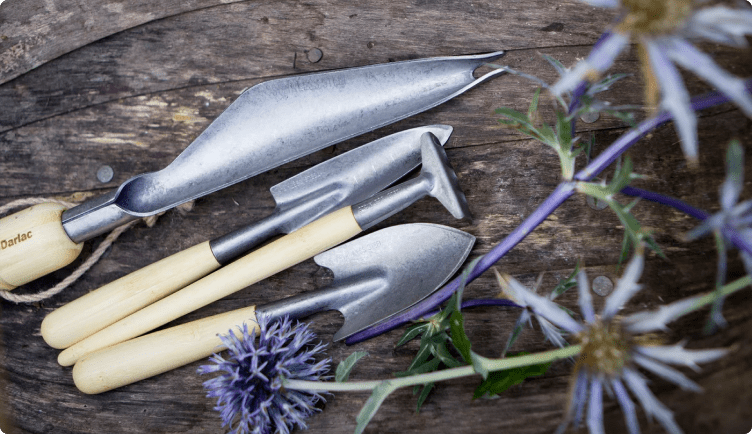
You don’t need much to start your flower seed journey, but here are Johnsons top recommendations that will make a real difference:
When seedlings have their first true leaves, normally indicated by the second pair, which look like the actual plant, move them into individual cells or pots. Make sure that you hold your seedling by a leaf, never the stem, as they will bruise easily and rarely recover.
Water the tray an hour before planting, as moist compost helps roots stay together. Ease your seedlings out with a dibber or pencil, holding by a leaf. Lower your seedling into a larger pot with fresh compost, firm gently, and water in.
Keep them out of harsh sunlight for a few days while they settle, and keep them indoors until the frosts are done, then harden them off over a week before they go outside for good.
Starting flower seeds indoors extends your season and fills your garden for pennies. One packet of cosmos can give you more plants than you know what to do with, in varieties that never appear on garden centre shelves. Get your summer display well underway and browse our Flower Seed Collection today.
Find our favourites in one place with our most very best flower plants.
Enjoy the beauty of growing from seed with our premium flower seeds.
Find out the latest on all things Johnsons when you join our email list!
By clicking Sign Up you're confirming that you agree with our Terms and Conditions.